
Shakhbout City is not the kind of place that appears in weekend lifestyle supplements. It doesn’t have a waterfront. It doesn’t have a five-star resort beach or a Formula One circuit. What it has is something many Abu Dhabi residents quietly find themselves wanting after a year or two on the island: genuine space, genuinely affordable rents, wide streets that feel like they were designed for families rather than Instagram, and a location that sits between a major hospital and a highway that will get you to Dubai in an hour.
That combination — space, affordability, healthcare access, and highway connectivity — is not glamorous. But it is practical in a way that matters to the people who choose it. And Shakhbout City’s consistent ranking among Abu Dhabi’s most sought-after areas for mid-range villa rentals reflects the fact that a growing number of residents have figured this out.
This Shakhbout City area guide covers everything — the community’s history and layout, property market data, schools, healthcare, shopping, dining, transport, and an honest picture of who the area works for and who it doesn’t.
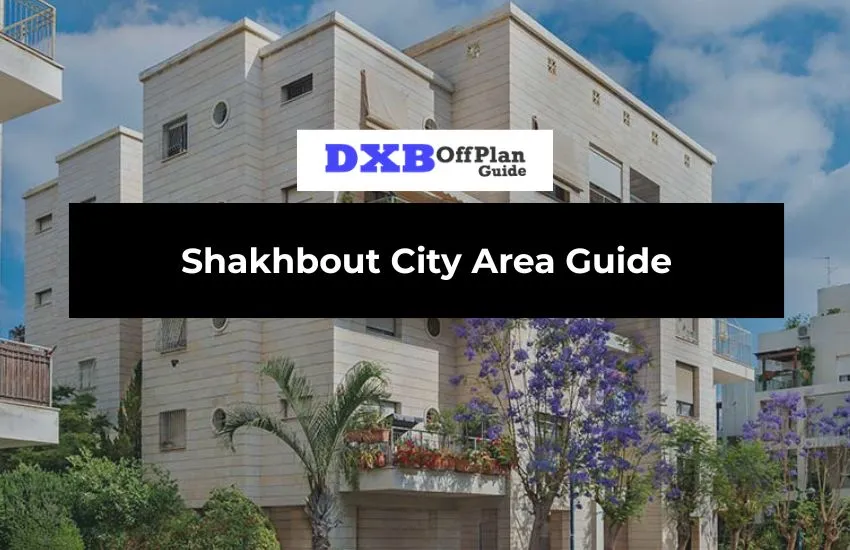
What Is Shakhbout City?
Shakhbout City is a suburban residential district on Abu Dhabi’s mainland, formerly known as Khalifa City B. It was renamed in honour of Sheikh Shakhbout bin Sultan Al Nahyan — one of the founding rulers of Abu Dhabi, who governed the emirate from 1928 to 1966 and played a formative role in its early development before the oil era fully transformed the region.
The community sits approximately 30 kilometres from Abu Dhabi city centre, positioned to the northeast of Mohammed Bin Zayed City and to the south of Zayed International Airport. It was developed as part of Abu Dhabi’s wider decentralisation strategy — moving residential density outward while preserving quality-of-life standards and giving Emiratis and expatriates access to larger homes at more accessible price points than the island communities command.
The area is characterised by wide internal roads, low-rise architecture, spacious villa plots, and a genuinely quiet suburban feel. It’s still developing — newer zones show active construction alongside established residential streets — but the core infrastructure is in place: schools, hospitals, mosques, supermarkets, community parks, and highway connections. As one of three areas that originally made up the broader Khalifa development (alongside what is now Khalifa City to the north and Zayed City further out), Shakhbout City has grown into its own distinct community with its own identity and demand profile.
Location: Where Is Shakhbout City?
Shakhbout City sits on Abu Dhabi’s southern mainland, connected to the wider emirate via Sheikh Maktoum Bin Rashid Road (E11) and the Abu Dhabi–Al Ain Road (E22). These two highways give the community solid connectivity in multiple directions — north toward Abu Dhabi city and the airport, east toward Al Ain, and via the E11 toward Dubai to the northeast.
- Zayed International Airport: Approximately 15–20 minutes by car
- Downtown Abu Dhabi / Corniche: Approximately 35–45 minutes
- Yas Island: Approximately 20–25 minutes
- Khalifa City (Khalifa City A): Approximately 10–15 minutes north
- Mohammed Bin Zayed City: Immediately adjacent — 5–10 minutes
- Al Raha Beach: Approximately 20–25 minutes
- Masdar City: Approximately 20 minutes
- Dubai (via E11): Approximately 60–70 minutes
- Al Ain: Approximately 90 minutes via E22
The airport proximity — 15 to 20 minutes — is a practical advantage for frequent travellers. The position between Mohammed Bin Zayed City and Khalifa City means Shakhbout City benefits from the amenities of both neighbouring communities without the premium pricing either has started to attract. A personal vehicle is essential — public transport exists (Bus routes 155 and 210 serve the area) but coverage is limited given the community’s scale and suburban spread.
The Community Layout: What Shakhbout City Actually Looks Like
Shakhbout City is built around a villa-first planning logic. Wide streets, low density, spacious plots, two-storey residential buildings with traditional architectural finishes, private walled gardens, and a noticeably lower noise and traffic level than anything closer to Abu Dhabi’s centre. It’s a community that was designed to be lived in by families — and it shows in the way the streets feel and how the space is organised.
The community is divided into a mix of standalone villa zones, villa compounds, and low-rise apartment blocks along the main commercial arteries. Early-developed sections have mature infrastructure — completed landscaping, operational community facilities, and a settled neighbourhood feel. Newer zones toward the outer edges of the masterplan show ongoing construction activity, which will continue to fill in and improve the community’s overall completeness over the next several years.
Mosques are distributed throughout the community — Al Karama Mosque, Al Etihad Mosque, Shakhbout Mosque, Afraa Mosque, and Al Khaleel Mosque are all prominent local landmarks and active community gathering points. The residential demographic is multicultural — Emirati families in the traditional villa zones, alongside a growing expatriate population from South Asia, the Arab world, the Philippines, and Europe.
Sheikh Shakhbout Medical City: The Community’s Healthcare Anchor
One of Shakhbout City’s most significant and genuinely unusual assets is the presence of Sheikh Shakhbout Medical City — a major specialist hospital directly within or adjacent to the community. This is not a general community clinic. Sheikh Shakhbout Medical City is a substantial hospital specialising in advanced burn treatment, orthopaedics, infectious diseases, and complex specialist care that most communities of Shakhbout City’s size and positioning simply don’t have on their doorstep.
For families with members who require specialist medical care, or for healthcare professionals looking for a residential address close to their workplace, this single amenity significantly elevates Shakhbout City’s practical value. Combined with the Cambridge Medical and Rehabilitation Center and additional clinics within the community, and the proximity to NMC Royal and Burjeel hospitals within 10–15 minutes, healthcare access in Shakhbout City is substantially stronger than most suburban communities of its scale and price point would suggest.
Schools in Shakhbout City
Education infrastructure is one of the primary drivers behind Shakhbout City’s growing expat population. The community has a solid range of international schools covering multiple curricula — not the density or rating profile of Khalifa City’s school lineup, but a meaningful and practical offering for families relocating to this part of the mainland.
Key Schools in and Around Shakhbout City
| School | Curriculum | Notes |
|---|---|---|
| Australian School of Abu Dhabi | Australian (ACARA) | Well-regarded; popular with Australian expat families |
| Sharjah American International School | American | American curriculum; large campus |
| Virginia International Private School | American / IB | Bilingual English-Arabic programme |
| Al Watan School | UAE National | Serves the Emirati residential community |
| Crescent International School | International | Within the broader Shakhbout area |
| Reach British School | British | British curriculum for expat families |
| ABC Private School | Multiple | Community-level school within Shakhbout |
Multiple nurseries and early years facilities also operate within and adjacent to the community. Families specifically targeting the highest-rated international schools in the Abu Dhabi mainland corridor — particularly GEMS American Academy or Raha International — will find those options 10–15 minutes away in Khalifa City, making Shakhbout City a practical base for school commutes even if the target school isn’t within the community itself.
Shopping and Retail Near Shakhbout City
Shakhbout City’s internal retail offering covers everyday needs — community supermarkets, pharmacies, local cafeterias, and small shops are spread throughout the residential streets. For anything beyond everyday essentials, the community relies on a short drive to larger retail destinations nearby.
Within and Immediately Adjacent to Shakhbout City
- Community supermarkets and grocery stores: Multiple options within the residential zones covering fresh produce, household essentials, and daily needs
- Pharmacies: Several spread across the community for everyday healthcare and pharmaceutical needs
- Mafraq Mall (under development): A major mall development planned for the community that, when complete, will significantly upgrade Shakhbout City’s internal retail and entertainment provision
Nearby (10–20 Minutes)
- Bawabat Al Sharq Mall: The nearest major mall to Shakhbout City — a well-developed regional shopping centre serving the Baniyas and wider mainland Abu Dhabi area, with supermarkets, fashion retail, dining, and entertainment
- Dalma Mall: A large mall in the Mohammed Bin Zayed City corridor with a broad range of retail, dining, and family entertainment options including a Magic Planet entertainment centre and cinema
- Forsan Central Mall (Khalifa City): LuLu Hypermarket, nine-screen cinema, family entertainment — accessible in 10–15 minutes via the Khalifa City connection
- Yas Mall (Yas Island): Abu Dhabi’s largest mall — approximately 20–25 minutes; covers the full premium retail, dining, and entertainment range
Dining in Shakhbout City
Shakhbout City’s internal dining scene is community-oriented and practical rather than destination-worthy. The honest picture: the community has local cafeterias, fast-food outlets, and small dine-in restaurants that serve the daily and weekly needs of residents well. For more diverse, upscale, or varied dining experiences, a short drive to Khalifa City, Yas Island, or the broader Abu Dhabi mainland restaurant scene is the realistic approach most residents take.
- The Tasha Restaurant: A popular local option within the community
- Farmer’s Burger House: A casual dining option well-regarded by local residents
- Karam Al Sham Restaurant: Arabic and Levantine cuisine — a community staple
- Watan Cafe: A neighbourhood café for everyday coffee and light bites
- Elysium Cafe and Restaurant: A sit-down option for casual meals
- Millennium Central Mafraq Hotel restaurants: The most hotel-grade dining within the community, accessible to non-guests
The expanding café and restaurant scene within Shakhbout City is one of the clearest signs of the community’s growing population and maturity. New openings continue to appear as the residential base expands — and the Mafraq Mall development will bring a step-change in dining variety when it opens.
Things to Do In and Around Shakhbout City
Within the Community
- Community parks and green spaces: Distributed throughout the residential zones — good for evening walks, children’s outdoor play, and weekend family time in the cooler months
- Mosques: Several prominent mosques serve as community gathering points and are central to the social fabric of the area
- Gyms: A growing number of independent gym facilities have opened within Shakhbout City to serve the resident population
- Cycling and jogging: Wide, low-traffic streets make the community better suited to outdoor exercise than most urban Abu Dhabi addresses — particularly in the early mornings of the October–April period
Nearby (Short Drive)
- Al Forsan International Sports Resort (15 minutes via Khalifa City): Karting, cable wakeboarding, equestrian, shooting, archery, paintball — one of Abu Dhabi’s most unusual and comprehensive leisure complexes
- Abu Dhabi Golf Club (15–20 minutes): Championship 18-hole course, DP World Tour host, open to non-members
- Yas Island (20–25 minutes): Ferrari World, Warner Bros. World, Yas Waterworld, Yas Mall, Yas Marina Circuit — the UAE’s most concentrated leisure and entertainment hub
- Al Raha Beach (20–25 minutes): Waterfront dining, beach access, and retail in the Al Raha Beach development
- Sheikh Zayed Grand Mosque (30–35 minutes): One of the world’s most significant and architecturally extraordinary mosques — essential visiting for any Abu Dhabi resident
- Mangrove National Park (35–40 minutes): Kayaking and paddleboarding through protected mangrove forests — a genuinely peaceful natural experience
- Hatta Mountain Reserve (approx. 90 minutes): Mountain biking, kayaking on Hatta Dam, heritage village — a popular long weekend destination for Abu Dhabi mainland families
Shakhbout City Property Market: Renting and Buying
According to Bayut’s Abu Dhabi Rental Market Report 2025, Shakhbout City ranks among the leading locations for mid-range villa rentals in the emirate — driven by competitive rents, proximity to schools and transport links, and the appeal of spacious villa living at prices that remain significantly below central Abu Dhabi and island districts.
Current Rental Prices (2025)
| Property Type | Annual Rent Range | Notes |
|---|---|---|
| Studio Apartment | AED 24,000–30,000 | Most affordable entry point in Abu Dhabi mainland |
| 1-Bedroom Apartment | AED 36,000–40,000 | Good value for size; growing supply |
| 2-Bedroom Apartment | AED 41,000–55,000 | Popular with small families and professionals |
| 2–3-Bedroom Villa | AED 60,000–120,000 | Entry-level villa living in the community |
| 4–5-Bedroom Villa | AED 130,000–200,000 | Mid-range family villas; private gardens common |
| 6–8-Bedroom Villa | AED 180,000–280,000 | Large family/extended family homes |
| 10–11-Bedroom Villa (luxury) | AED 270,000–430,000 | Mansions with pools; sought by large Emirati families |
Property Sale Prices
| Property Type | Sale Price Range | Notes |
|---|---|---|
| Apartments | AED 1M–1.5M | Good entry-level investment; growing demand |
| Residential Plots | AED 2.45M+ | 14,000–40,000 sq ft; custom build opportunity |
| 5–6-Bedroom Villa | AED 5.6M–8.5M | Modern builds; private pools available |
| Luxury Mansion (6-bed+) | AED 6.5M–10M+ | Fully renovated, furnished options available |
Ownership Rules: Freehold and Leasehold
The ownership picture in Shakhbout City is slightly more nuanced than in Khalifa City to the north. Parts of Shakhbout City have freehold availability — a distinction from the purely leasehold Khalifa City — though the extent and specific zones of freehold designation should be confirmed with a registered Abu Dhabi real estate agent and the Abu Dhabi Department of Municipalities and Transport before proceeding. Expatriates can access 99-year leasehold arrangements across the community. UAE and GCC nationals can purchase on a freehold basis in designated zones. Residential plots ranging from 14,000 to 40,000 square feet are also available for purchase — giving buyers the option to design and build a custom villa, which is an unusual offering for an Abu Dhabi suburban community at this price level.
For investors, the community’s affordability premium — lower entry prices than central Abu Dhabi, strong family rental demand, and the development trajectory of the Mafraq Mall and surrounding infrastructure — supports a mid-to-long-term value proposition. For context on the broader Abu Dhabi and UAE investment landscape, the 10 best off-plan projects in UAE 2026 covers the most active development corridors nationally and gives useful comparative context.
Shakhbout City vs. Neighbouring Communities
| Feature | Shakhbout City | Khalifa City | Mohammed Bin Zayed City | Zayed City |
|---|---|---|---|---|
| Former Name | Khalifa City B | Khalifa City A | MBZ City | New Khalifa City / Capital District |
| Character | Quiet suburban / developing | Established suburban | Dense suburban | Emerging masterplan |
| Rent Level | ⭐⭐⭐⭐⭐ (lowest) | ⭐⭐⭐⭐ | ⭐⭐⭐⭐ | ⭐⭐⭐⭐⭐ (lowest / similar) |
| School Quality | ⭐⭐⭐⭐ | ⭐⭐⭐⭐⭐ | ⭐⭐⭐⭐ | ⭐⭐⭐ (still developing) |
| Hospital Access | ⭐⭐⭐⭐⭐ (Sheikh Shakhbout Medical City) | ⭐⭐⭐⭐ | ⭐⭐⭐⭐ | ⭐⭐⭐ |
| Leisure Amenities | ⭐⭐⭐ (limited internal) | ⭐⭐⭐⭐⭐ (Al Forsan + Golf) | ⭐⭐⭐ | ⭐⭐ (still developing) |
| Mall Access | ⭐⭐⭐ (Bawabat, Dalma nearby) | ⭐⭐⭐⭐ (Forsan + Yas) | ⭐⭐⭐⭐ (Dalma Mall) | ⭐⭐⭐ |
| Freehold Available | ⚠️ Partial / confirm | ❌ Leasehold primarily | ❌ Leasehold primarily | ✅ Yes (designated zones) |
| Airport Proximity | ⭐⭐⭐⭐⭐ (15–20 min) | ⭐⭐⭐⭐⭐ (10–15 min) | ⭐⭐⭐⭐ | ⭐⭐⭐⭐⭐ (5–10 min) |
| Dubai Commute | ⭐⭐⭐⭐ (60–70 min) | ⭐⭐⭐⭐ (60–75 min) | ⭐⭐⭐⭐ | ⭐⭐⭐⭐ |
For anyone making a decision between Shakhbout City and Khalifa City specifically, the Khalifa City Area Guide covers that community in equal depth — including its Al Forsan Sports Resort advantage and outstanding school roster — and reading both guides side by side gives a clear picture of the trade-offs between the two.
Pros and Cons of Living in Shakhbout City
✅ Pros
- Some of the most affordable rents in Abu Dhabi for villa-scale properties — studios from AED 24,000, 3-bed villas from AED 120,000
- Sheikh Shakhbout Medical City on the doorstep — a specialist hospital asset that most comparable communities don’t have
- Wide, low-traffic streets — a genuinely quiet suburban environment with space for families
- Spacious villa plots with private gardens and pools — 3 to 11-bedroom range
- Solid school provision within and adjacent to the community
- 15–20 minutes from Zayed International Airport
- Strong highway connectivity — E11 to Dubai (60–70 min), E22 toward Al Ain
- 20–25 minutes from Yas Island entertainment hub
- Continuing infrastructure investment — Mafraq Mall development will bring meaningful retail and dining upgrade
- Mid-to-long-term investment potential as the community completes and matures
- Residential plot availability — custom villa build opportunity at competitive land prices
❌ Cons
- Limited internal dining and entertainment — significantly less variety than Khalifa City or central Abu Dhabi
- A car is essential — public transport (Bus 155 and 210) exists but is insufficient for comfortable car-free living
- 35–45 minutes from Abu Dhabi city centre — not practical for daily downtown commuters
- Parts of the community are still under construction — incomplete infrastructure in newer zones
- No metro access — entirely road-dependent for transport
- Leisure amenities within the community are limited — Al Forsan and Yas Island require a drive
- Summer heat (June–September) severely limits outdoor activity — parks and streets are uncomfortable midday
- Nightlife and social entertainment essentially non-existent within the community
Who Is Shakhbout City Best For?
Shakhbout City works best for a specific type of resident — and it works very well for them. Understanding that profile clearly is more useful than a generic “it’s good for families” claim.
Large families — particularly Emirati families and expat families from South Asia and the Arab world who need 4 to 10 bedrooms — find Shakhbout City one of the most practical places in Abu Dhabi to get the space they need at a price that doesn’t force compromises elsewhere in the family budget.
Healthcare professionals working at Sheikh Shakhbout Medical City will find this a rare community where you can genuinely walk or cycle to one of Abu Dhabi’s major specialist hospitals.
Abu Dhabi–Dubai commuters who’ve made the calculation that the E11 journey is acceptable in exchange for significantly lower housing costs than either emirate’s central areas charge — Shakhbout City fits that profile cleanly.
Frequent air travellers and Etihad/airline staff for whom the 15–20 minute airport proximity is a weekly practical advantage.
Investors looking for entry-level Abu Dhabi mainland property — particularly residential plots for custom builds or apartments at AED 1M–1.5M — in a community with a clear development trajectory and improving infrastructure.
Shakhbout City is not for people who want to walk to restaurants, be near Abu Dhabi’s cultural and social core, or access the kind of leisure variety that Khalifa City’s Al Forsan and golf club provide. Those residents will be better served by communities a step closer to the city. For that specific comparison, the Khalifa City Area Guide covers the neighbouring community’s stronger leisure and school offering in full detail.
Best Time to Visit or Move to Shakhbout City
October through April is the optimal period — when temperatures are comfortable enough to use the community’s parks and streets, children can play outdoors, and the wide, tree-lined residential avenues feel genuinely pleasant. The school year starts in September, which drives the majority of family relocations into the May–August window — so the best properties at the most sought-after price points tend to get taken quickly before the new school year. Starting your property search 3–4 months ahead of a September move is strongly advisable.
June through September requires adjusting expectations — outdoor life is limited to early mornings and evenings, and the community’s limited indoor entertainment options mean a car journey to Yas Island or Khalifa City becomes more necessary during summer weekends. Rental prices during summer months are typically at their lowest, making it the best window for negotiating a good deal if you’re not school-year dependent.
Frequently Asked Questions About Shakhbout City
What was Shakhbout City previously called?
Shakhbout City was formerly known as Khalifa City B — part of a trio of developments alongside Khalifa City A (now simply Khalifa City) and New Khalifa City (now Zayed City). The area was renamed Shakhbout City in honour of Sheikh Shakhbout bin Sultan Al Nahyan, one of Abu Dhabi’s founding rulers.
Is Shakhbout City freehold?
Parts of Shakhbout City have freehold designation, which differentiates it from neighbouring Khalifa City where the market is primarily leasehold for expatriates. UAE and GCC nationals can purchase on a freehold basis. The specific freehold zones and current availability should be confirmed with a registered Abu Dhabi real estate agent, as zoning designations can change. Expatriates can access 99-year leasehold arrangements across the community.
How far is Shakhbout City from Abu Dhabi Airport?
Approximately 15–20 minutes by car from Zayed International Airport — making it one of the more conveniently airport-positioned suburban communities in Abu Dhabi. This is a meaningful practical advantage for airline staff, frequent business travellers, and families with members who travel regularly.
What hospitals are near Shakhbout City?
Sheikh Shakhbout Medical City — a major specialist hospital — is directly within or adjacent to the community, offering advanced care in burns, orthopaedics, and infectious diseases. The Cambridge Medical and Rehabilitation Center is also within the community. NMC Royal Hospital and Burjeel Hospital are both within 10–15 minutes. This healthcare concentration is one of Shakhbout City’s strongest and most distinctive practical assets.
Is Shakhbout City good for families?
Yes — particularly for large families who need significant space at an accessible price point. The spacious villa stock, wide quiet streets, school provision, and Sheikh Shakhbout Medical City’s proximity make it a practical family choice. It does not have the leisure amenity depth of Khalifa City (no Al Forsan equivalent, no championship golf course within the community), but its affordability advantage over its northern neighbour is substantial for families prioritising space and healthcare access over sports and entertainment variety.
How long does it take to get from Shakhbout City to Dubai?
Approximately 60–70 minutes under normal traffic conditions via the E11/Sheikh Maktoum Bin Rashid Road. During peak morning and evening commute hours, this can extend to 80–90 minutes. Shakhbout City’s position on the mainland highway corridor makes it workable for Abu Dhabi–Dubai commuters, particularly those with flexible working hours or hybrid arrangements.
Final Verdict: Is Shakhbout City Worth It?
Shakhbout City is not a community that makes promises it can’t keep. It doesn’t offer Al Forsan’s extraordinary sports infrastructure, or the school density of Khalifa City, or the waterfront lifestyle of Al Raha Beach. What it offers — clearly, consistently, and at a price point that very few Abu Dhabi addresses can match — is space, quiet, good healthcare, solid schools, a developing retail base, and a highway position that keeps the rest of the emirate reachable without turning every commute into an event.
For the right resident — the large family that needs a six-bedroom villa with a private pool and garden and isn’t willing to pay Khalifa City prices for it; the healthcare professional whose workplace is Sheikh Shakhbout Medical City; the Dubai commuter who wants an Abu Dhabi base without downtown Abu Dhabi’s premium; the investor looking at entry-level mainland Abu Dhabi before prices mature further — Shakhbout City is not a compromise. It’s the right choice.
As the Mafraq Mall comes online, as infrastructure continues to fill in, and as Abu Dhabi’s long-term decentralisation strategy continues to push quality amenities further into the mainland corridor, the gap between what Shakhbout City offers and what it costs to live there will narrow. The people who’ve already worked this out are there. The people who work it out next will find the prices have moved.
Ready to explore property or rental options in Shakhbout City? Get in touch with our team — we cover the Abu Dhabi mainland corridor comprehensively and can help you identify the right community, the right sub-zone, and the right property for your budget and lifestyle needs.


Leave a Reply